


MobileTrader
MobileTrader: trading platform near at hand!
Download and start right now!

 28.10.2026 02:11 PM
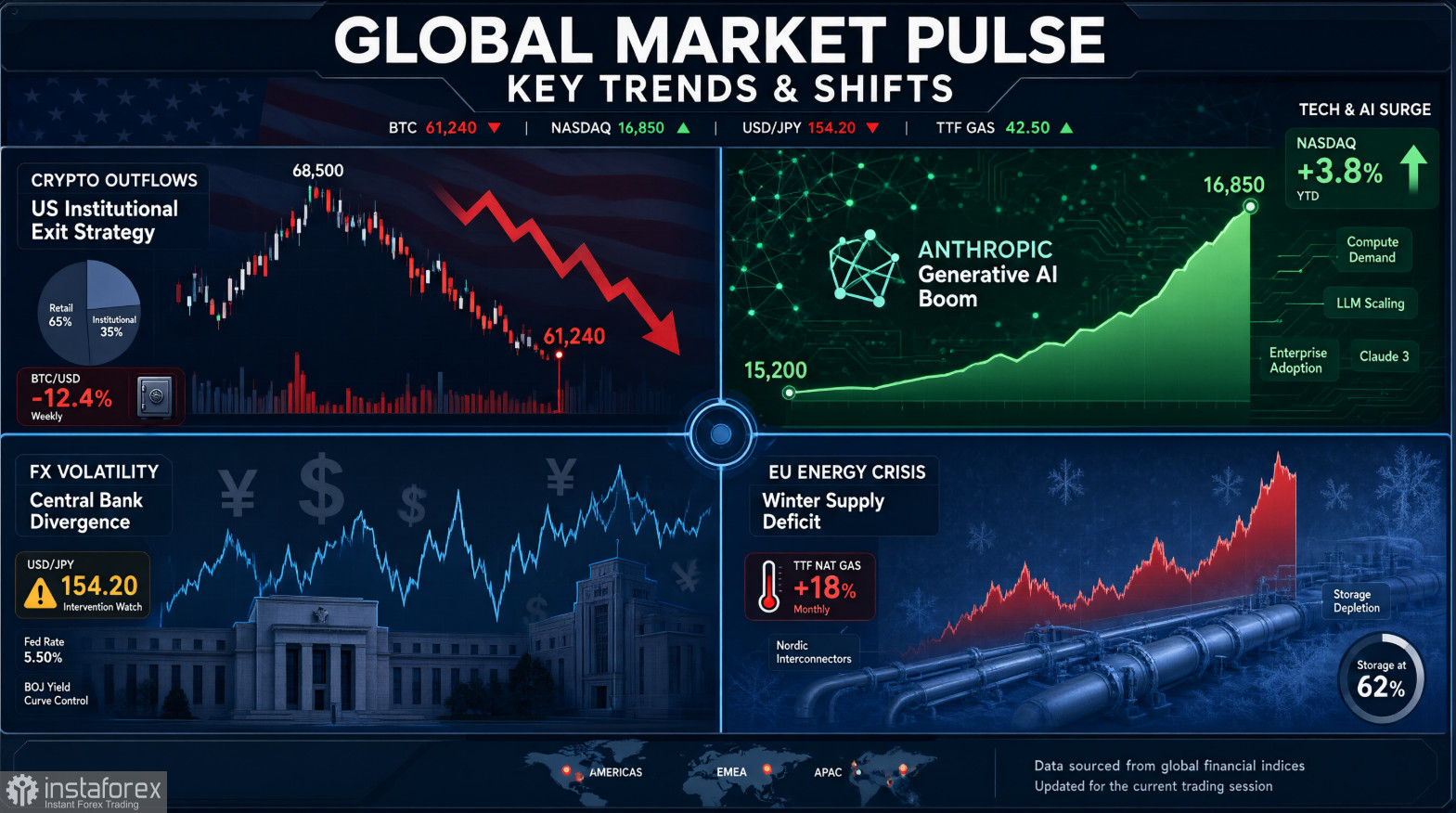
In this review, we analyze four key developments shaping the current landscape: an unprecedented cooling of American investors' interest in Bitcoin that threatens to make this month the worst in six years.
We also discuss fluctuations in the Japanese yen ahead of anticipated decisions by the Fed and the Bank of Japan, as well as the triumphant return of confidence in the artificial-intelligence sector following a successful IPO by Anthropic.
Equally important is the growing energy storm in Europe — gas prices in the region have hit four-year highs due to low inventories and escalation of the Middle East conflict.
October 2026 could go down as one of the most disappointing months for crypto investors. The world's leading digital currency, bitcoin, is heading for its weakest October since 2020, driven by an unprecedented lack of demand from US buyers.
Americans have left the game
According to CryptoQuant, a firm specializing in on-chain analytics, US investors have practically ignored trading throughout the current month. This has been a key driver of the negative move: after closing September at $83,567, bitcoin has fallen 4.2%.
For comparison: from 2020 to 2024, the cryptocurrency showed consistent October gains, averaging +18.1%. Even last year, when that impressive streak was broken by a 3.8% decline, the situation did not look this bleak. If the current trend continues, October 2026 will be the worst in six years.
Indicators sound the alarm
The Coinbase Premium index, which compares bitcoin's price on the US exchange Coinbase with prices on foreign venues, is especially telling.
All month this indicator has been negative, dropping to its lowest levels since June. On October 24, the premium hit -0.146, and the monthly average (-0.093) was three times worse than September's figure. Simply put: American buyers are willing to pay less for bitcoin than their counterparts abroad.
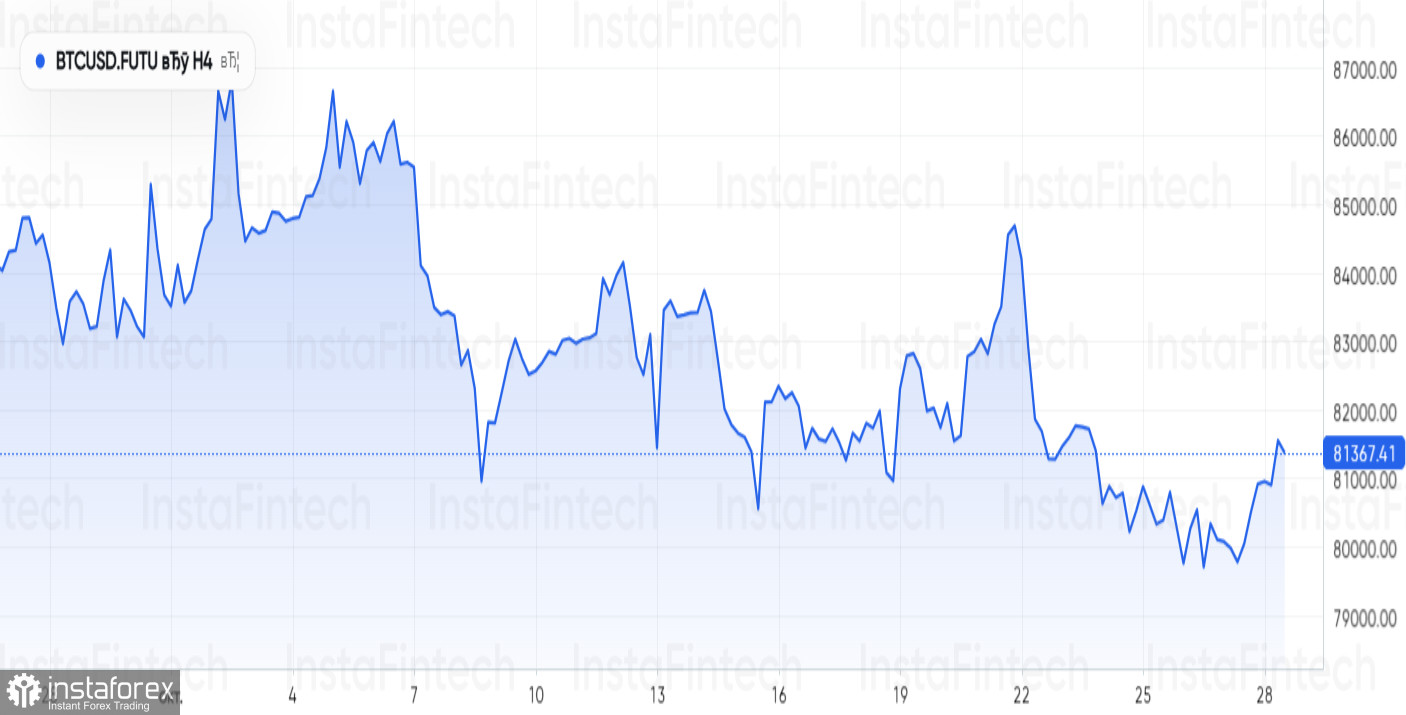
The situation is worsened by aggregate spot demand, which has shown negative daily readings since October 14. By October 25, cumulative demand over the past 30 days had fallen by roughly 76,000 BTC. In effect, new buyers are absorbing coins more slowly than miners are producing them.
The bull market cools
Short-term holders (those holding Bitcoin for one to three months) have virtually lost their cushion. On September 22, Bitcoin traded 33.4% above their average purchase price; by October 26, that gap had plunged to a modest 8.1%.
CryptoQuant's Bull Score Index, which aggregates ten key market indicators, also fell sharply — from 90 to 60 points. Analysts interpret this as a sign that the market's bullish phase is gradually cooling. A drop below 50 would signal a full regime change.
What's next?
The market faces two major events ahead that could dramatically change the picture: the Federal Reserve's policy decision (October 28) and the US midterm elections (November 3).
Meanwhile, CryptoQuant analysts identified support zones: the 365-day moving average sits at $77,600, while the average cost basis of traders' positions is around $74,000. Experts believe bitcoin could find temporary relief in the $73,000–$77,600 range.
Want to stay on top of market moves and be able to react quickly? All the instruments discussed in this article, including Bitcoin and other cryptocurrencies, are available to trade on the InstaForex platform. Open a trading account now and download the company's mobile app to stay connected to the market and not miss opportunities wherever you are.

The Japanese yen, which shone last week as a true safe-haven currency, gave up some of its gains on Tuesday, October 27. The currency weakened against the dollar for the second session in a row as risk appetite returned. What happened? Tech giants' stocks revived, and traders held their breath ahead of two crucial events — the Federal Reserve and the Bank of Japan decisions.
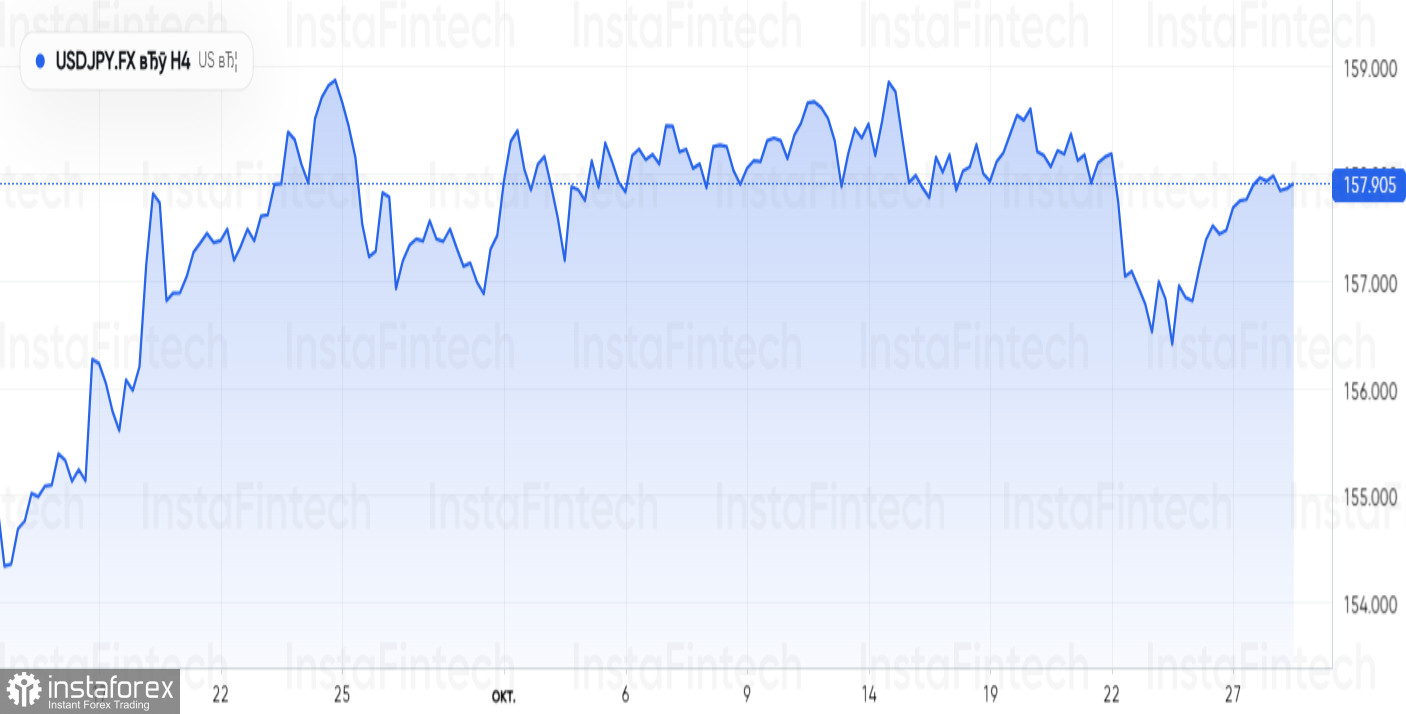
According to Reuters, the US dollar is now trading near the top of the 157-yen range, moving away from the monthly low recorded only a week ago. FXStreet analysts note a steady trend: USD/JPY has risen for three consecutive days despite a recent brief dip to 156.
From panic to euphoria: what happened to the AI sector?
Last week, the yen was one of the main beneficiaries among major currencies. Reuters reported it strengthened about 0.75% against the dollar — the largest weekly gain since early September. That move was driven by investor concerns about an overheated AI-related equity market. In such moments, capital typically flows into safe havens, and the yen is often a favorite.
However, the situation changed sharply. Anthropic's IPO filing and Meta's ambitious plan to raise $95 billion via new share issuance restored confidence in the AI sector. Investors are ready to take risks again, reducing the need for the yen as a haven. The euro's weakness — pressured by rising worries about France's public finances — added support to the dollar.
Bonds respond to changing sentiment
Lower demand for safe havens was reflected in Japan's government bond market (JGBs). The Economic Times, citing Reuters, reports that the 10-year JGB yield rose 1.5 basis points to 2.795%. Even more notable was the two-year yield, which is particularly sensitive to central bank policy and rose for the second session in a row.
Key events of the week: what to expect from the regulators?
All eyes are on two key dates. First, on Wednesday, October 28, the Fed will conclude its two-day meeting. Most analysts expect the regulator to hold rates steady and refrain from another hike.
Second, on Friday, October 30, the Bank of Japan will announce its decision. The market expects the BOJ to keep the policy rate at 1.25% but to signal a readiness to tighten further. Producer prices in Japan's services sector rose 3.7% year-on-year in September, underscoring mounting inflationary pressures.
Markets are already pricing in just over a 50% chance of a BOJ rate hike in December. "We still expect one more hike at the final meeting this year, although it's unclear whether the BOJ is ready to commit firmly to that," Ebury analysts told Reuters. MUFG's analysts predict the regulator will conclude that core inflation is broadly in line with its 2% target.

The technology sector is on the rise again. After weeks of nervousness and sell-offs, the market received a long-awaited signal: the AI boom is not only continuing; it is moving into a phase of real monetization.
On Tuesday, October 27, tech giants' shares rose for a second session in a row. The main catalyst for optimism was Anthropic's public filing for an initial public offering (IPO). The move dispelled investors' fears that the AI euphoria was fading under the weight of massive spending and the sector's growing debt.
Figures that speak for themselves. The Nasdaq Composite closed up 1.2% on Tuesday, building on Monday's gain (+0.8%) when the Anthropic filing first hit the newswires. By contrast, just a few weeks earlier markets had been gripped by fears of an AI-sector "bubble."
Anthropic itself, the developer of the popular chatbot Claude, disclosed striking financials. Revenue for the first half of the year came in at $16.3 billion versus a modest $1.2 billion a year earlier — more than a thirteenfold increase. The picture is not entirely straightforward, however: operating losses reached $693 million, and net losses were an astronomical $80.7 billion.
An important nuance: the lion's share of the net loss ($72.4 billion) was non-cash charges related to convertible debt. That means the company's actual cash losses are much smaller than the headline number suggests.
Bets placed: half a trillion on compute Anthropic plans to list on Nasdaq under the ticker "ANT." The most eye-catching disclosure in the filing concerns future investments: the company has committed to purchase more than $500 billion worth of computing capacity. It is a colossal bet that demand for AI solutions will keep growing.
As AFP notes, the IPO is a kind of litmus test for the entire industry. A successful offer would confirm that AI can generate real profits rather than merely burning investor cash; a failure could seriously cool market enthusiasm.
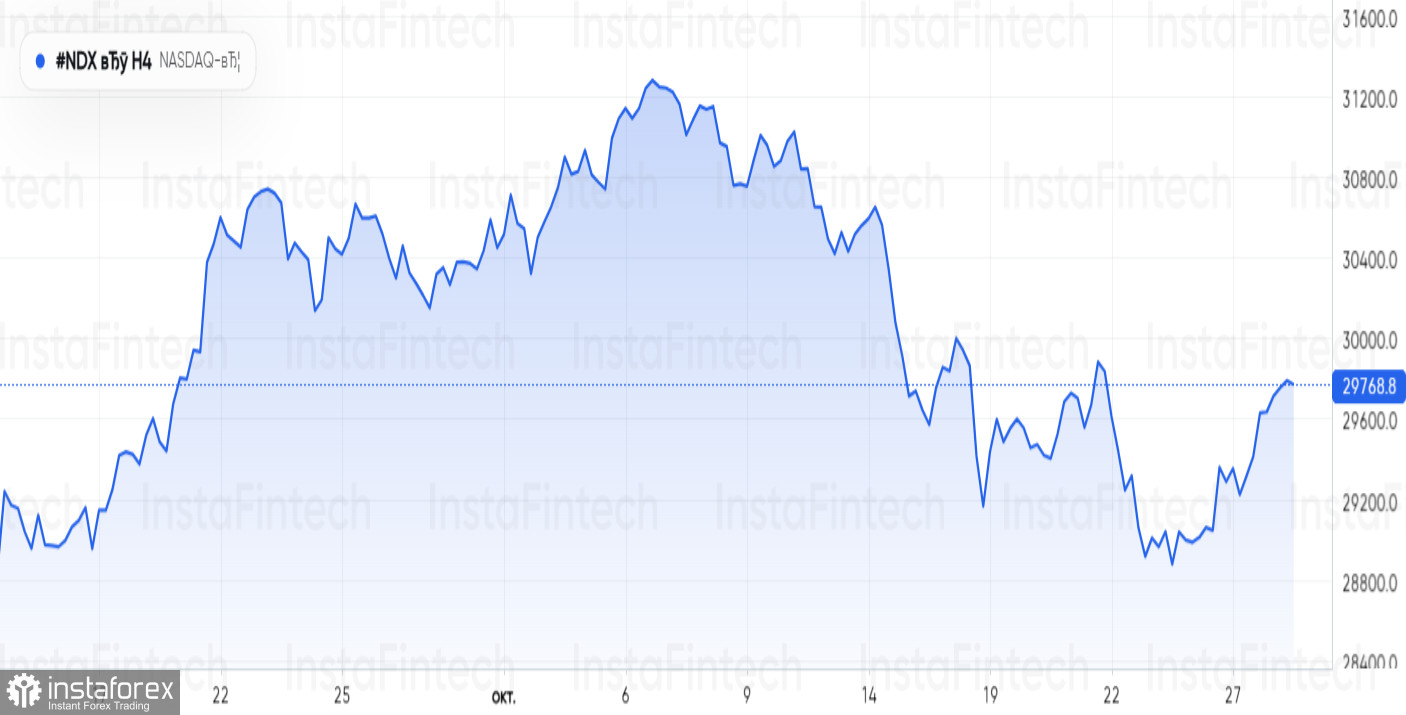
Winners of the day: who benefited from the AI news?
"Investors still show huge interest in owning stocks in this segment," said Celine Wu of Lazard Asset Management in a comment to MarketWatch.
Global markets: mixed reactions
The current situation shows that the AI market is undergoing an important transition: from a phase of unchecked infrastructure spending to a stage of real commercialisation of technologies. Companies that can demonstrate revenue growth and a clear path to profitability are receiving strong investor support.
The European gas market has once again found itself at the epicentre of a geopolitical storm. On Monday, October 26, natural gas prices breached the psychologically important threshold of €97 per megawatt-hour for the first time since 2022. Futures at the key Dutch TTF hub (the continent's main price benchmark) jumped to €97.64, reaching a near four-year high. By comparison: gas traded at about €28 at the start of the year — a colossal rise of 234%.
What's behind this price fever? Two main factors: worries about winter inventories and the escalation of the Middle East conflict. Traders are nervously watching every development in the region, where supply disruptions could be catastrophic for Europe's energy security.
A fragile lull
On Tuesday, markets exhaled slightly: prices fell below €95 amid hopes for a diplomatic de-escalation. Saudi Arabia, Turkey, and Pakistan held talks with Iranian representatives that Tehran described as "very good." However, it is too early to relax — attacks on ships in the strategically vital Strait of Hormuz continue, so the risk of supply disruptions remains.
Stocks at historic lows
Gas storage levels are a serious concern. According to the EU Agency for the Cooperation of Energy Regulators (ACER), European underground storage facilities are only 75% full — the lowest end-of-October level since records began in 2009. The situation in Germany is even tighter: storage is a little over 61% full.
This summer was difficult for replenishing reserves. Slow refill rates have meant some countries have already started drawing from winter stocks. In Austria, for example, storage levels fell from 69.3% in mid-October to 67.2%. And winter hasn't even begun. Weather forecasts are not encouraging: a cold spell is expected, which will sharply increase heating demand.
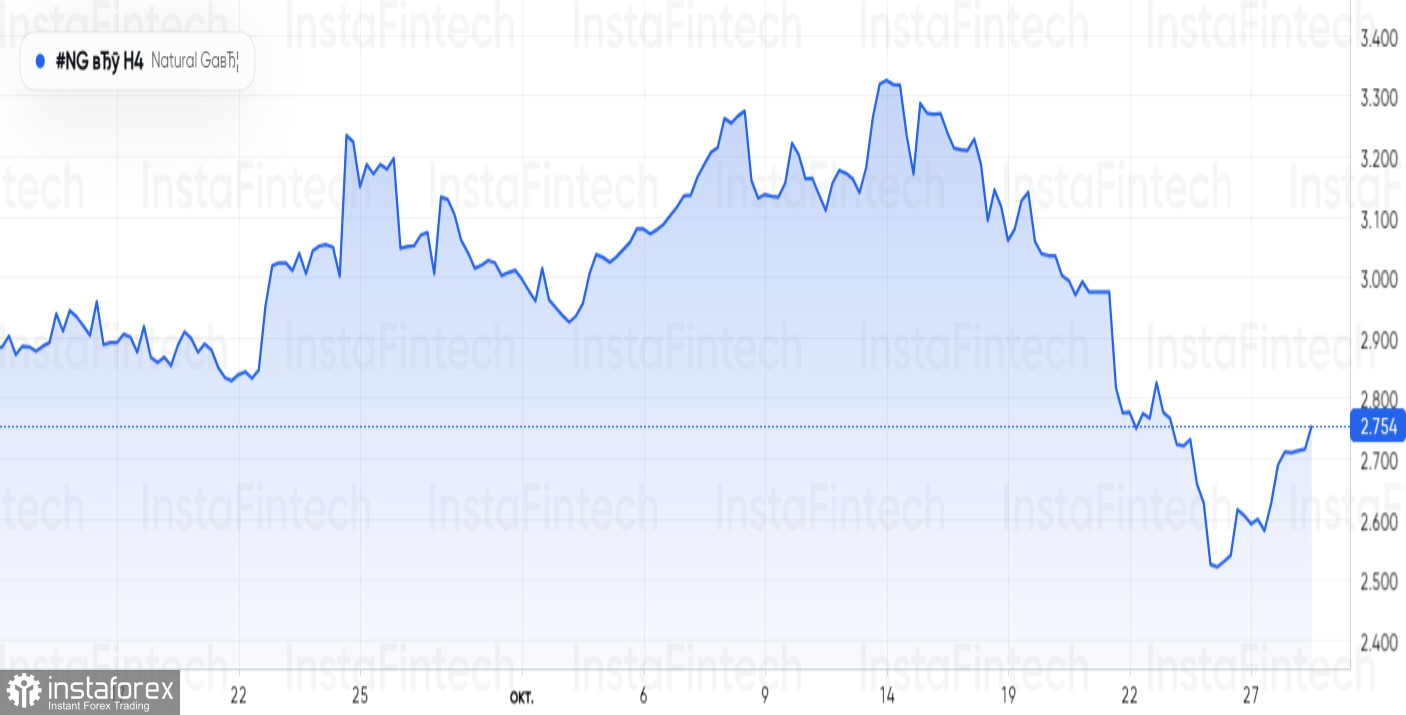
A chain reaction is already underway: electricity prices have risen along with gas. French one?month?ahead power futures topped €200/MWh for the first time since January 2023.
Geopolitics hits wallets
The Middle East conflict is costly for Europe. ACER estimates additional gas import costs at €18–33 billion. Summer export disruptions through the Strait of Hormuz deprived the EU of significant volumes of Qatari LNG, increasing the bloc's reliance on US suppliers. The United States now accounts for about 30% of all imported gas.
Every missing cargo must be sourced on an overheated global market, where Asian buyers fiercely compete for every LNG tanker. The situation is worsened by unplanned outages at Norwegian gas facilities. Ahead looms another challenge: the EU's planned ban on Russian LNG from January 2027, which could create further shortfalls.
A long road back to balance
Expert forecasts are not reassuring. Wood Mackenzie analysts warn that by the end of March European storage could fall to a critical 17–20%, even if winter is relatively mild.
Tom Marzec-Manser, director of gas and LNG in Europe, told Euronews that even if the conflict ends quickly, it will take time for the global LNG market to return to balance — possibly until autumn 2028. "Wholesale gas prices in Europe will remain high for most of that period," the expert stressed.
Europe faces a difficult winter, balancing geopolitical risks, limited stocks and rising demand. The energy market is becoming more volatile, and the ability to respond quickly to price changes is turning into a key skill for investors and traders.
Want to keep up with market trends and trade gas, oil and other energy assets? All instruments discussed in this article are available on the InstaForex platform. Open a trading account now and download the company's mobile app to stay connected to the market and make informed decisions in real time.
MobileTrader: trading platform near at hand!
Download and start right now!
You have already liked this post today
*Disclaimer: The market analysis posted here is meant to increase your awareness, but not to give instructions to make a trade.
 Email for authors of text and video analytical content: content-authors@instaforex.com


